Why teach about sustainability?
Sustainable food is good for the planet and for us. This takes into account not only the environment, but also nutrition, and socio-economic factors such as affordability and accessibility.
The government’s sustainability and climate change strategy (updated December 2023) states that all children and young people should learn about the natural environment, including the importance of sustainability. Food and nutrition, particularly at GCSE or equivalent level, has been identified as providing opportunities for pupils to be taught about the environment and sustainability, in context. There are also opportunities EYFS and primary key stages, where cross-disciplinary and interdisciplinary teaching is more often found.

In Wales and Scotland a substantive review of the curriculum in relation to climate education has been carried out as as part of a wider curriculum review.
The recent Curriculum and Assessment Review in England recommended that sustainability should be explicitly included in the new Food and Nutrition National Curriculum. There is also further opportunity to embed teaching around green skills and green jobs.
Educating children and young people about sustainability through the context of food and nutrition helps them understand the environmental impact of food production while encouraging actions like reducing waste and eating seasonally. It equips them with life skills, including meal planning and critical thinking, to make informed, ethical, and health-conscious decisions that support both local and global communities. This knowledge prepares pupils to address future challenges, contribute to sustainable practices, and act as responsible citizens.
Key learning objectives
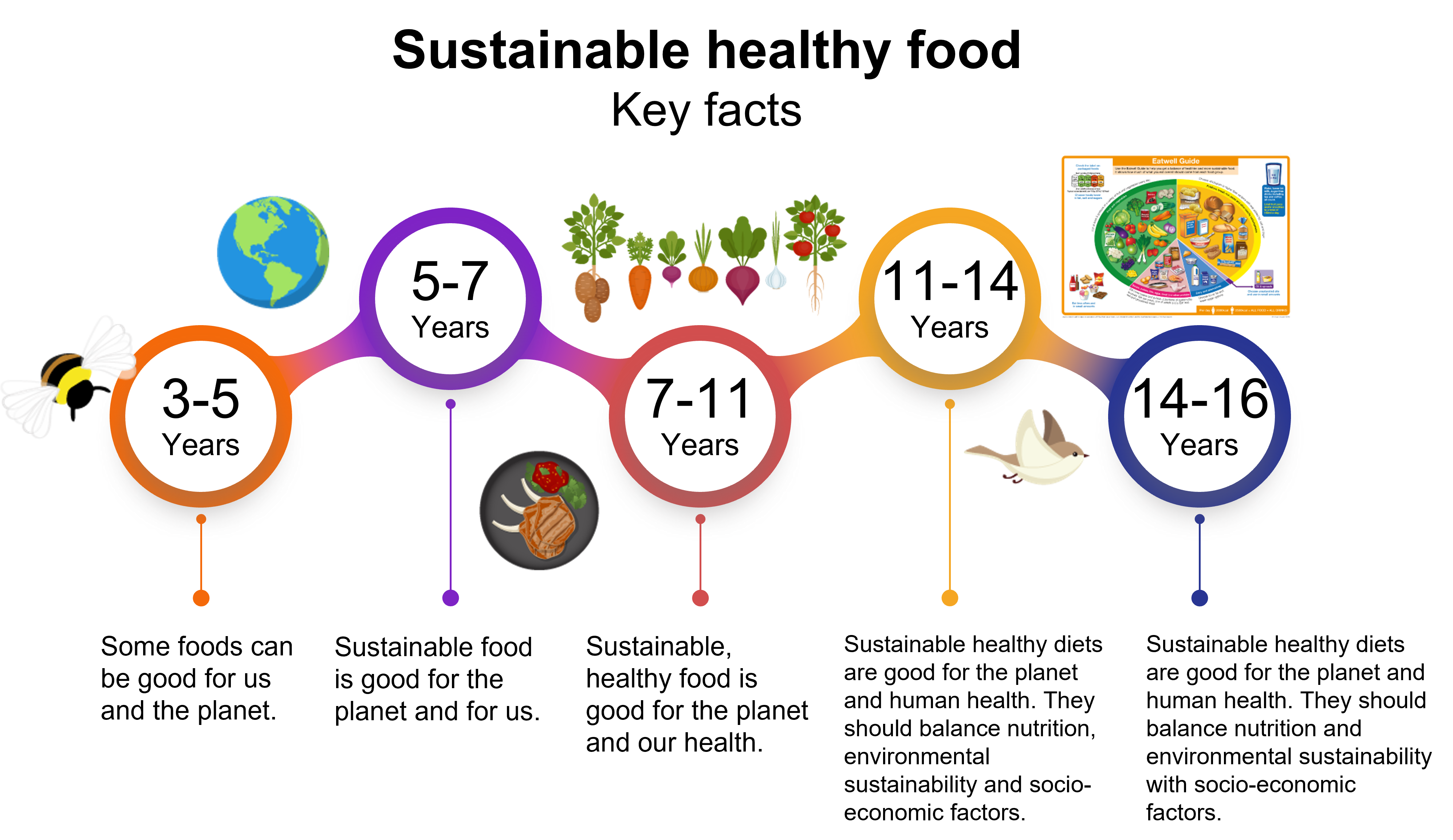
The key learning objectives/intent around sustainable healthy food, for each age phase, are:
- Some foods can be good for us and the planet. (3-5 years)
- Sustainable food is good for the planet and for us. (5-7 years)
- Sustainable, healthy food is good for the planet and our health. (7-11 years)
- Sustainable healthy diets are good for the planet and human health. They should balance nutrition, environmental sustainability and socio-economic factors, e.g. affordability. (11-14 years)
- Sustainable healthy diets are good for the planet and human health. They should balance nutrition and environmental sustainability with socio-economic factors, e.g. affordability, accessibility and cultural acceptability. (14-16 years)

For each age phase, you will find a comprehensive presentation for pupils covering the main factors that make up a sustainable healthy diet, for example nutrition and health, environmental impact, affordability, accessibility, cultural acceptability and safety.
The presentation can be used in its entirety, or you can use the hyperlinks to choose the slides most relevant to the particular focus of your teaching and learning around sustainable healthy food. There are a few short questions at the end of each section, with answers on the next slide, to check for understanding.
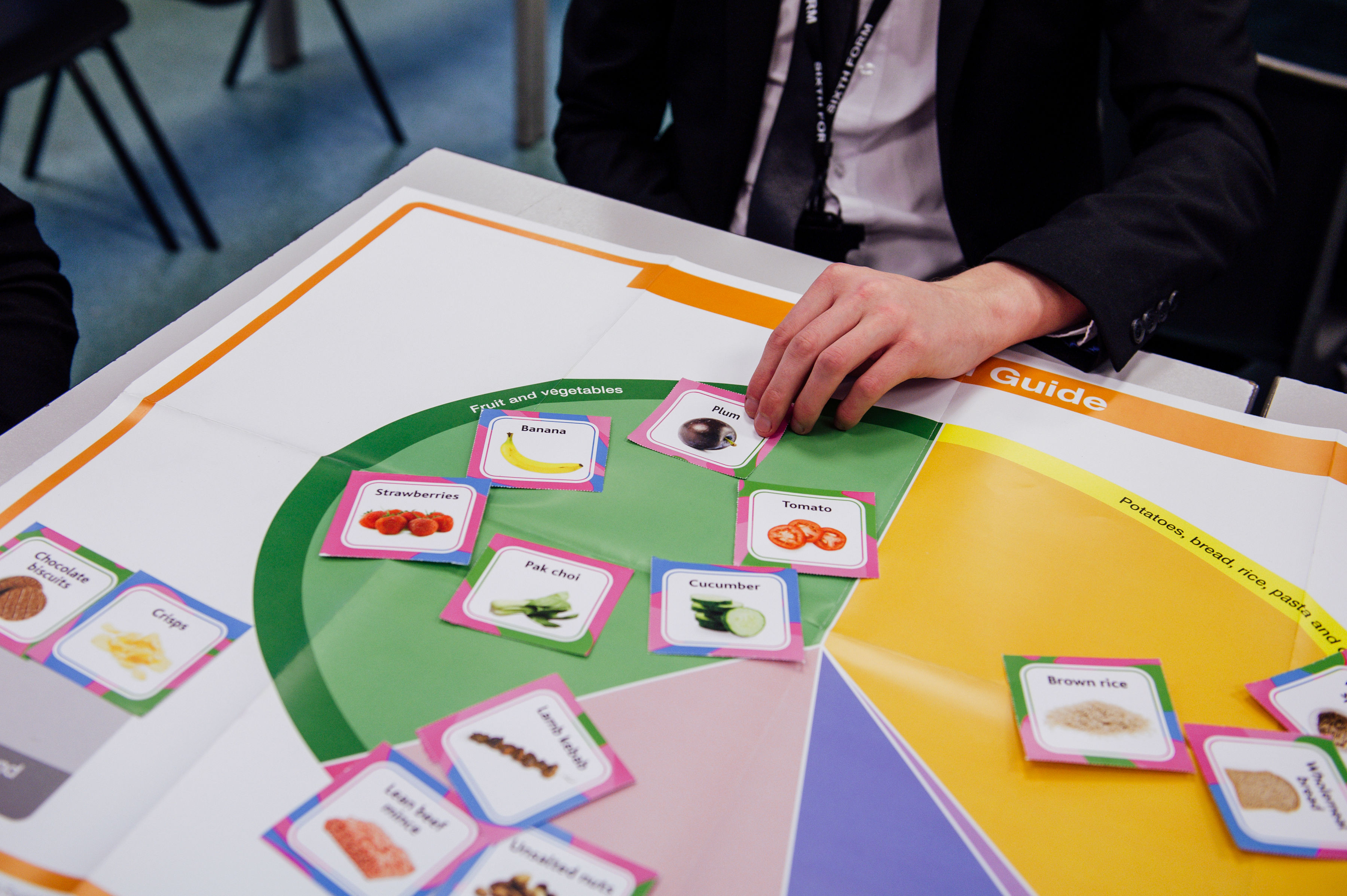
There are also a variety of different pupil activities which support different learning styles, encourage independent learning and are suitable for individual, class or group work. These include pick and mix activities, role plays, research tasks and worksheets to check recall and understanding.
For other Where food comes from topics, click below:
Sustainability for 3-5 years
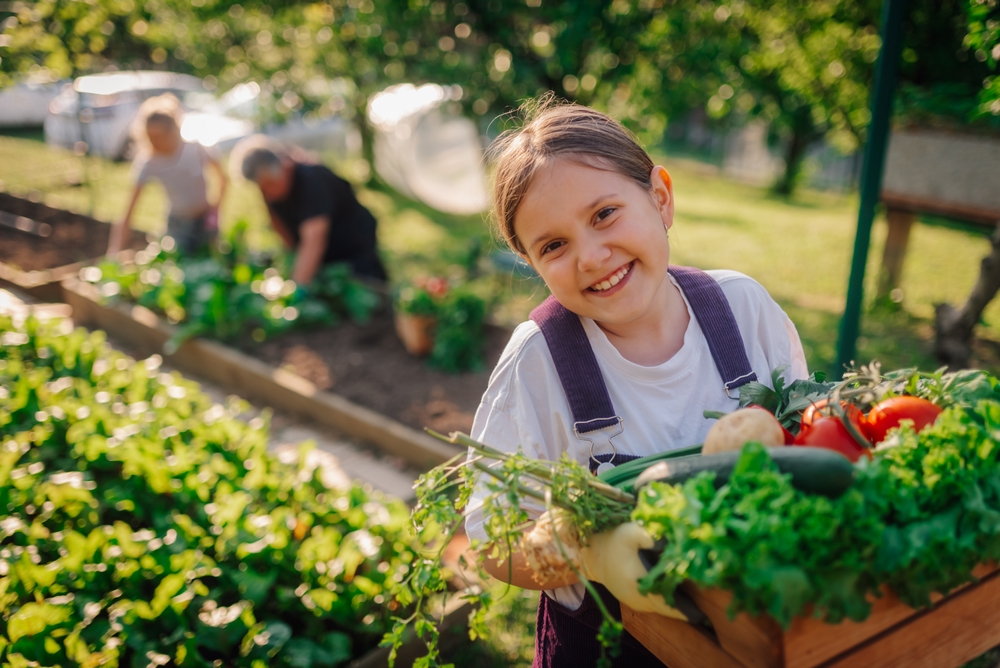
Sustainability and food is a complex area and difficult to explain to young learners. However, there are simple actions that everyone, including young children, can take to help keep themselves and the planet healthy. These resources comprise a slide deck and activity sheets that focus on two themes that are actionable for young learners - Eat a variety of food and Reduce food waste.

Sustainability resources for 3-5 years
Sustainability for 5-7 years
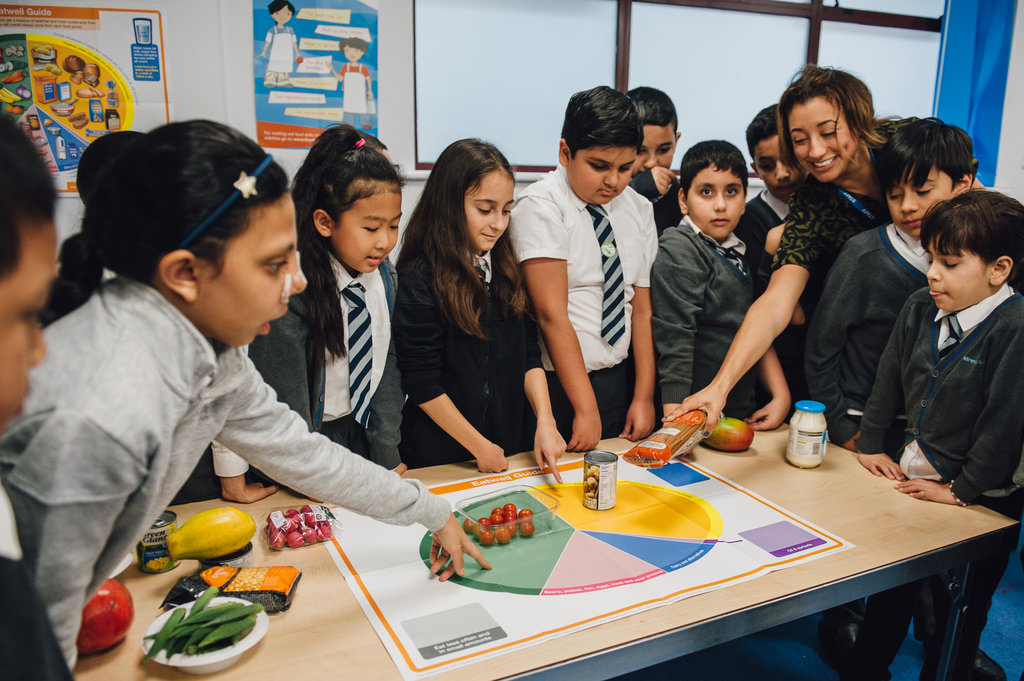
Below you will find a comprehensive presentation for pupils aged 5-7 years years covering the main factors that make up a sustainable healthy diet. There are also three 'pick and mix' activity sheets that are designed to suit a variety of learning styles and develop creativity and independence. The Sustainable healthy diets overarching presentation can be used to support the activities, and the pick and mix activities are ideal for home learning, individual or group work.
These resources are suitable for pupils in England and Wales (Key Stage 1, years 1 and 2), Northern Ireland (primary 2-3) and Scotland (Primary 1-3).

Sustainability resources for 5-7 years
Sustainability for 7-11 years
Below you will find a comprehensive presentation for pupils aged 7 - 11 years covering the main factors that make up a sustainable healthy diet. There are also three 'pick and mix' activity sheets that are designed to suit a variety of learning styles and develop creativity and independence. The Sustainable healthy diets overarching presentation can be used to support the activities, and the pick and mix activities are ideal for home learning, individual or group work.

Sustainability resources for 7-11 years
Sustainability for 11-14 years
Below you will find a comprehensive presentation for pupils aged 11-14 years covering the main factors that make up a sustainable healthy diet.
There are also three 'pick and mix' activity sheets that are designed to suit a variety of learning styles and develop high-level thinking skills and discussion, along with creativity and independence. The Sustainable healthy diets presentation can be used to support the activities, and the pick and mix activities are ideal for home learning, individual or group work, or for cover lessons.

Sustainability resources for 11-14 years
Sustainability for 14-16 years
Below you will find a comprehensive presentation for pupils aged 14-16 years covering the main factors that make up a sustainable healthy diet.
There is also a 'pick and mix' activity sheet, presentations covering biodiversity, food security and preventing food waste, along with related pupil activities.