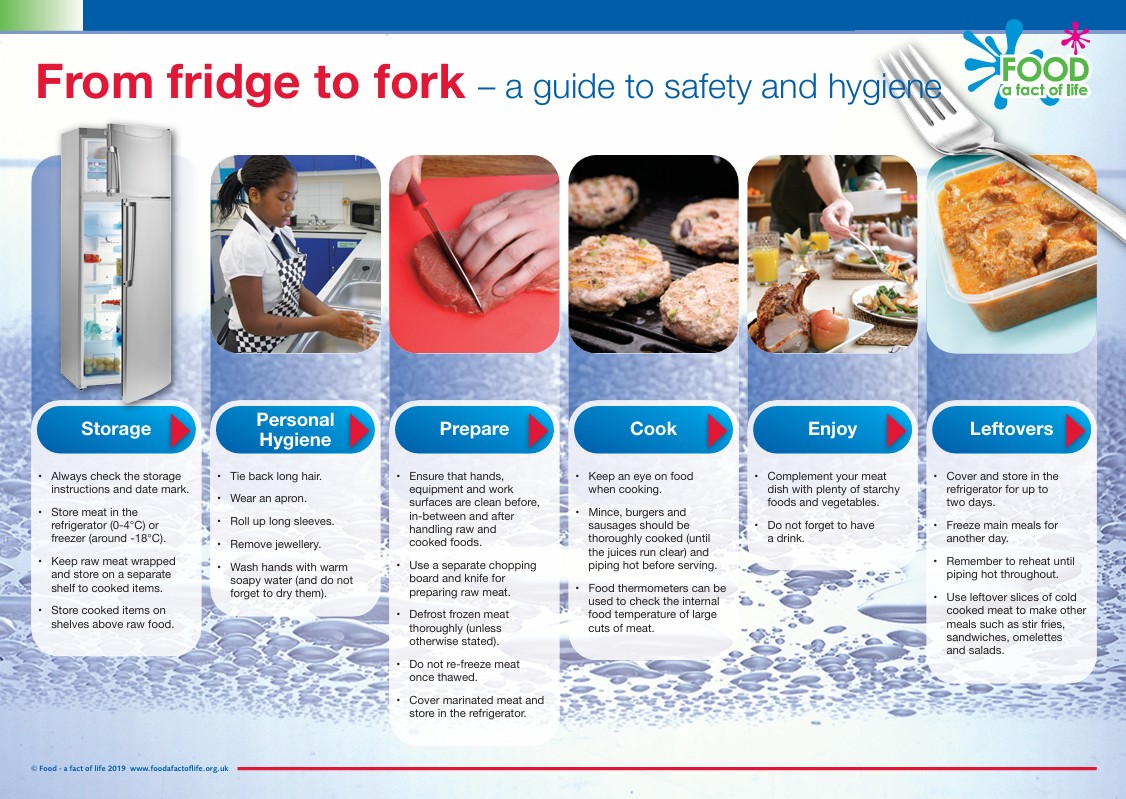
To introduce the general topic of food hygiene and safety, show the Food hygiene presentation and task the pupils to complete the Food hygiene worksheet.
To demonstrate an understanding of preventing cross-contamination, ask the pupils to complete the Cross-contamination checklist.
To encourage independent working, give each pupil a Food hygiene card and task them to research the image and find out two relevant food hygiene facts. Ask each pupil to explain what they have found out to the rest of the class. This could be completed as an activity during class time or for homework.
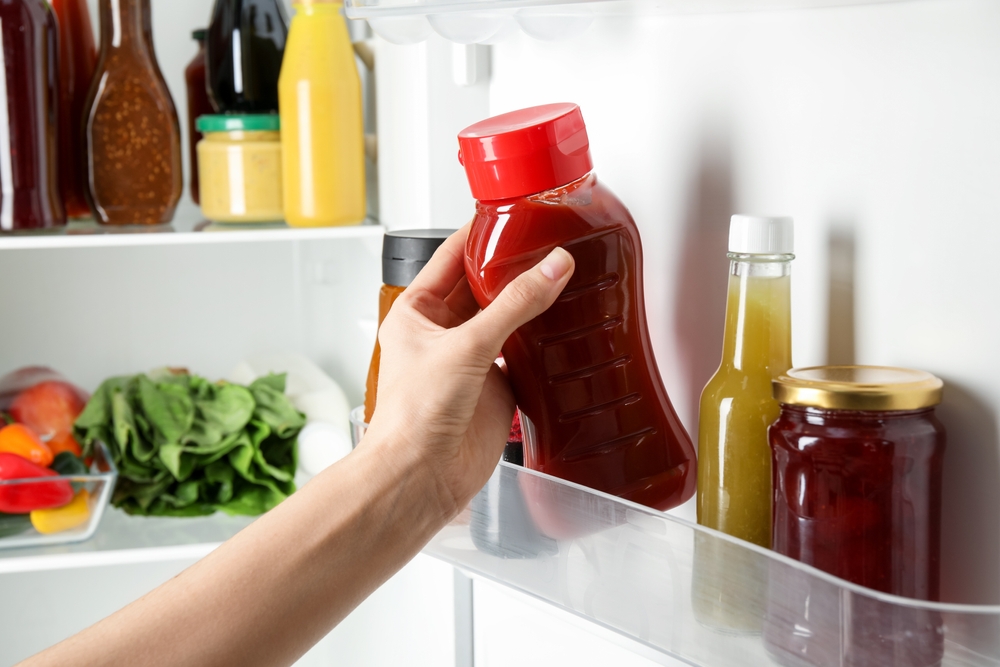
To demonstrate the importance of safe food storage, print out the Food cards – fridge and freezer activity, cut out the cards and attach some sticky tac to the back. Draw the inside of a fridge freezer on a white board and ask the pupils to place the foods in the correct place:
- Top shelf – ready to eat foods such as dairy products, yogurt and cream;
- Middle shelf - ready to eat foods such as cream cakes, butter, cooked meats, left-over food and packaged foods;
- Bottom shelf – raw meat and poultry;
- Salad drawer – salad, fruit and vegetables;
- Freezer – wrapped or bagged fish, meat, vegetables, fruit, dairy.
Alternatively, use the Safe storage activity sheet.
To help pupils visualise good food safety practices in action, task them to create a poster highlighting the top tips for ensuring food is safe to eat. Some pupils may like to use images from the internet or magazines, some may wish to draw freehand and others may want to use the Hygiene sketches.
Ask the pupils to complete the Food hygiene thinking map or the Food hygiene and safety worksheet to determine their understanding of food hygiene and safety.
To consolidate knowledge, put the class into teams and ask the questions from the Food hygiene and safety questions pack. Use a timer to add an extra element of competition. Alternatively, play ‘pass the bomb’ using a soft ball – stand the pupils in a circle and ask one pupil to throw the ball to another, the pupil catching the ball must answer a question and then throw the ball to another pupil. If they get the answer wrong, they are out of the game. The pack contains a range of questions so the most appropriate ones can be chosen for the particular class and their experience and knowledge.
To check understanding, use the Food hygiene bingo game presentation and Food hygiene bingo game activity sheet. Task the pupils to choose nine images from the bingo game presentation and write what they represent on the bingo board. They should then cross out the images when they appear on the slide. When they have three in a row (diagonal, up and down or across) they should shout Bingo! Follow up the bingo game with the extension task.
To help pupils apply their knowledge and prepare for a upcoming practical lesson, task them to complete the Stripy salad pot risk assessment activity. This activity, which can be adapted to suit other recipes) challenges the pupils to consider the actions required to ensure the safe production and storage of a dish.
Producing a time plan for the making of a dish enables pupils to think carefully about the order in which tasks need to be done, especially simultaneous tasks, to ensure that all elements of the dish, meal or menu are ready at the right time. Food hygiene and safety points can also be highlighted to ensure that the finished dish is safe to eat. The Time plan activity can be used to plan the making of a dish in detail. If more than one dish is being made, pupils can practice the activity of dovetailing by producing a plan for each dish (perhaps in a different colour). They should then cut out each step and then stick them in the order they are required to be done to ensure everything comes together at the right time. For example, when making cottage pie the potatoes should be prepared and put onto boil before the meat layer is made so that the cooked potatoes can be mashed and ready for the time the mince is cooked.
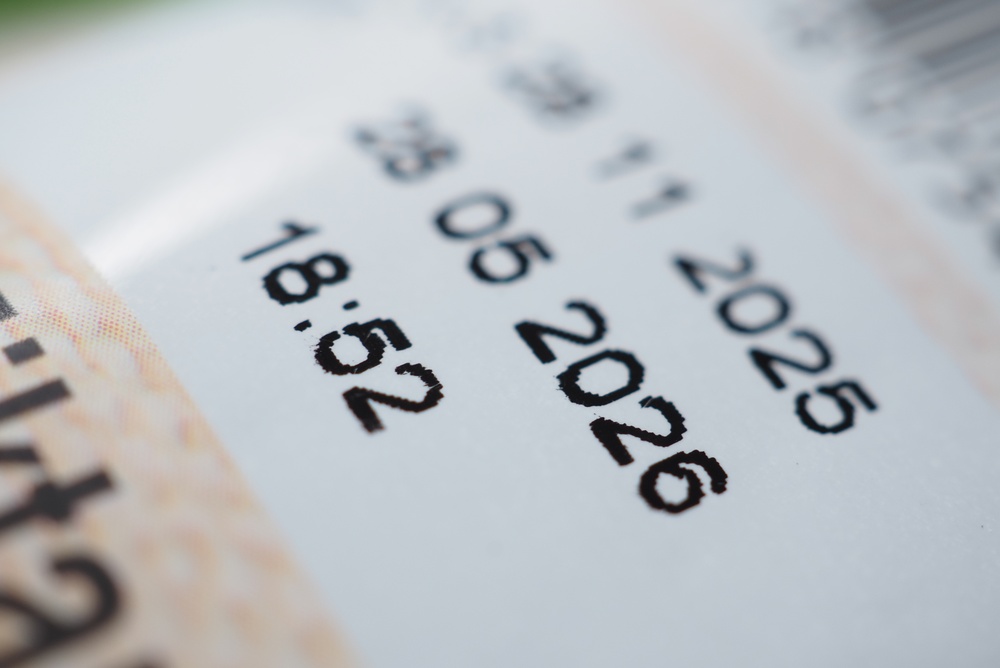
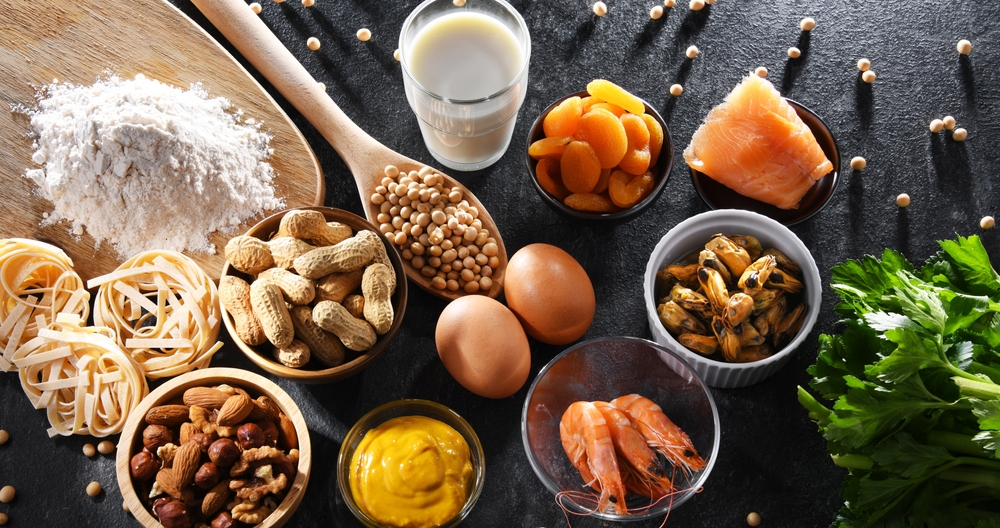
In preparation for future practical tasks, ask the pupils to produce sticky labels for their storage containers. The labels should include the pupil’s name, form (if appropriate), the date the dish was made, the name of the dish, storage instructions and cooking and/or reheating instructions (if appropriate). The label should also identify any allergens in the dish. Labelling pupil’s storage containers encourages good fridge management in the practical room, e.g. food can be discarded if not collected after 48 hours, and also enables pupils and their families to store and cook/reheat the food made safely which reduces the risk of food poisoning and illness. Ensure that the pupils know that food should be eaten within 48 hours of when it was made (24 hours for rice dishes) and that it should be reheated only once. Editable examples of storage container labels include Beef casserole, Lamb Rogan josh and burgers. There is also a sheet of Mixed storage labels for a further twelve dishes which can be adapted.