Food commodities - Potatoes

Potatoes

Potatoes

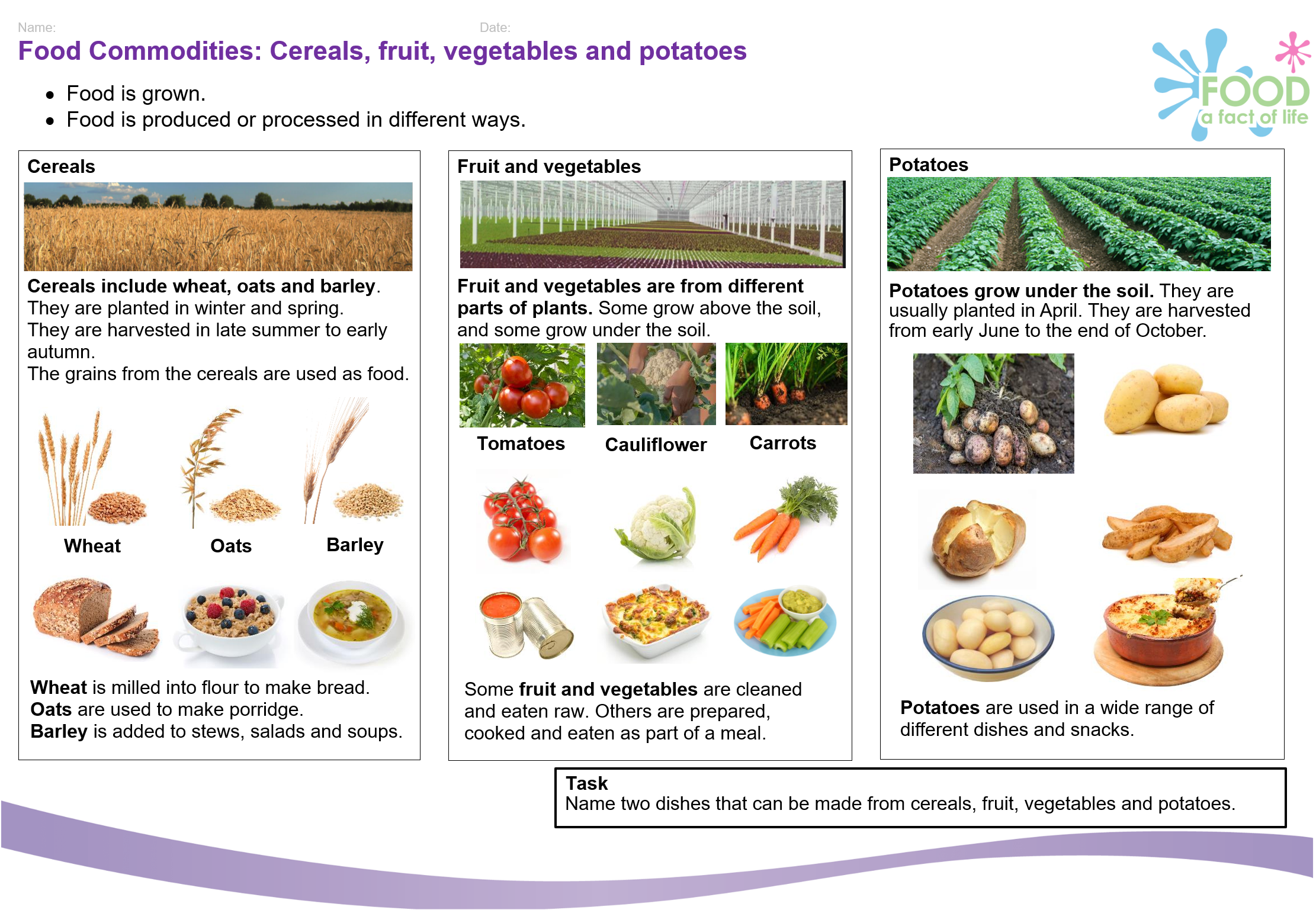
Potatoes are a widespread, versatile and reasonably affordable source of starchy carbohydrate.


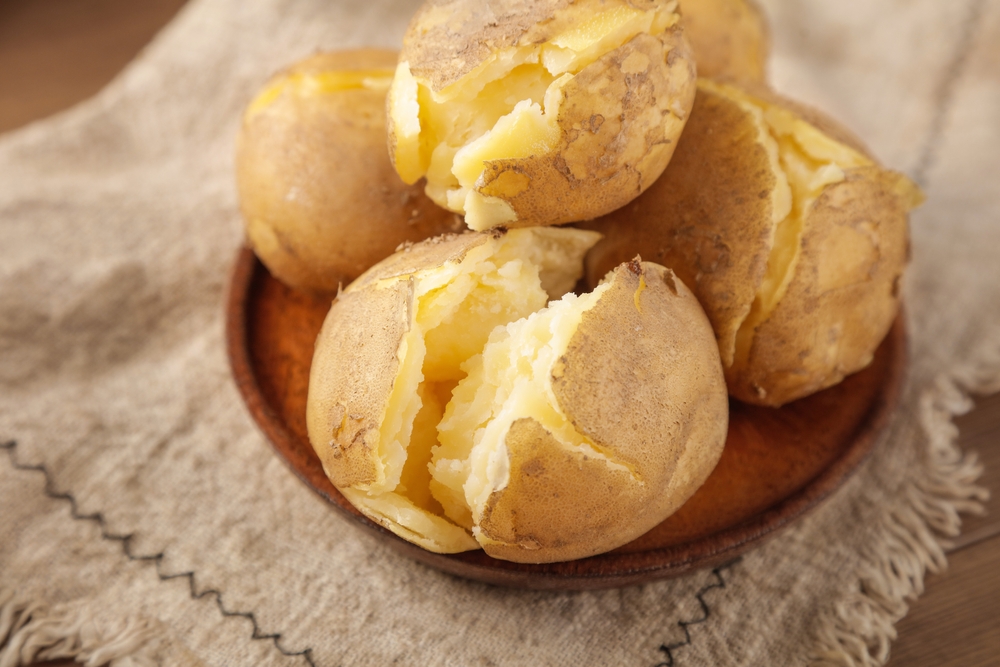
This means they form the base of many meals and can be cooked in a variety of ways:

  • Boiled
  • Steamed
  • Fried
  • Baked
  • Roasted

In this area, your pupils can learn about how potatoes are grown, prepared and eaten. You can find more potato dishes in the Cooking and Recipes area.

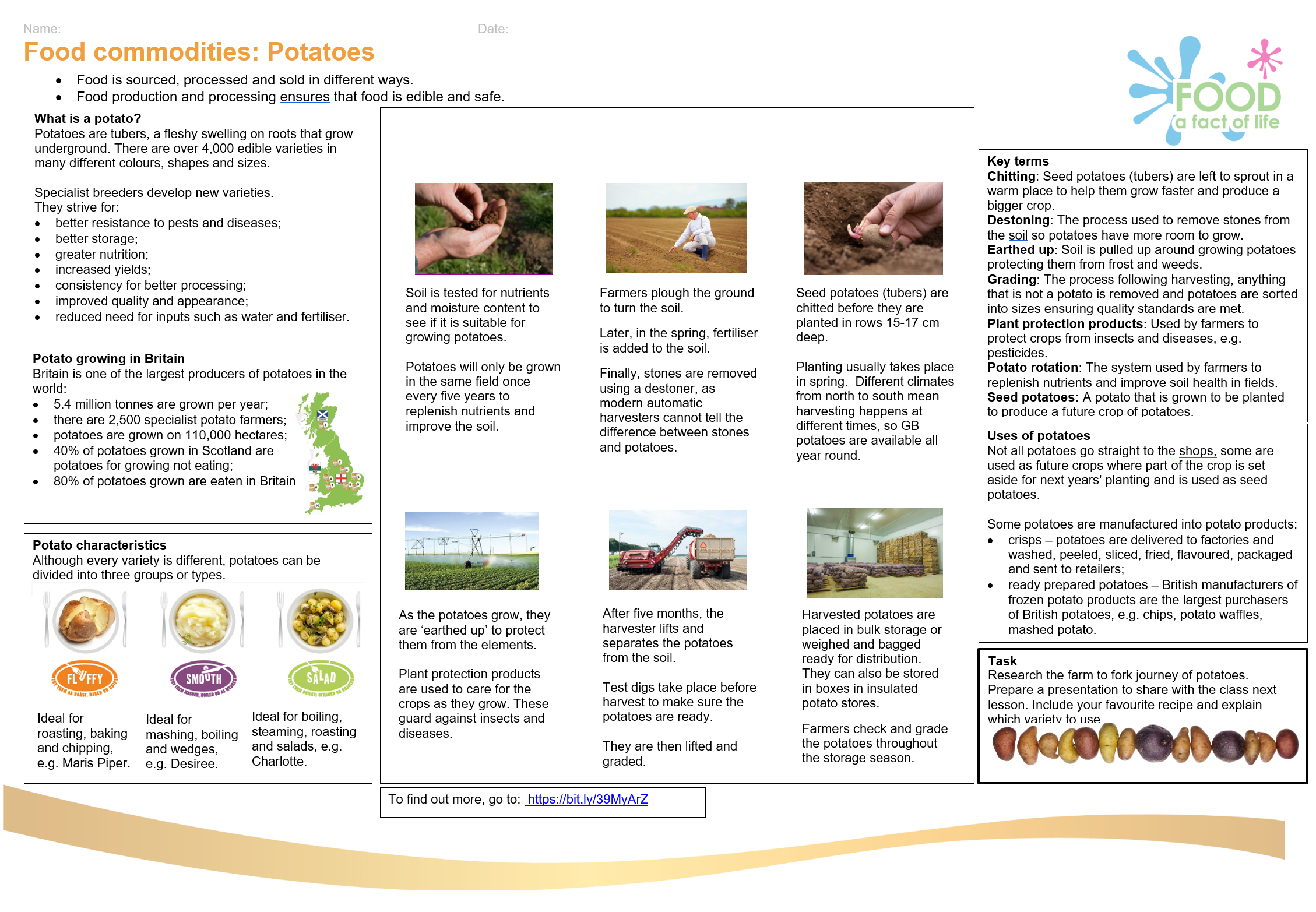
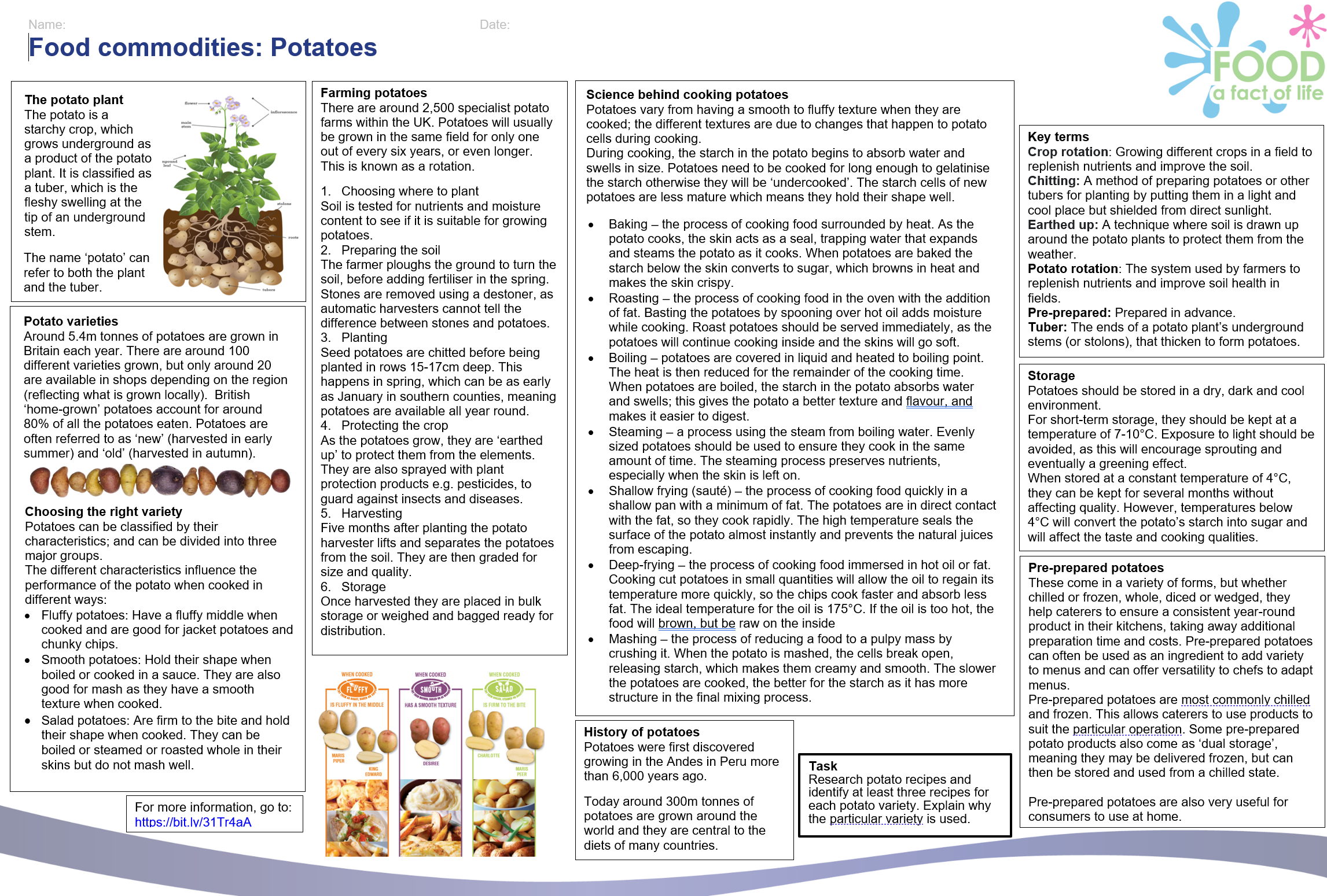
Knowledge Organisers for potatoes

These Knowledge Organisers provide the 'need to know' for your pupils on the topic of potatoes!

Potatoes for 5-11 years

Activity 1: The potato

Introduction

Explain to the children that they will be learning about potatoes. Ask them to tell you what they already know about potatoes.  Prompt them with the following questions, collecting children’s answers without confirming any ideas at this time:

  • What do potatoes look like?
  • Where do potatoes come from?
  • What do you think a potato plant looks like?
  • Is a potato plant alive?
  • What part of a plant does a potato come from?
  • How long do you think they take to grow?
  • What time of the year are they planted and harvested?
  • How are potatoes cooked?

Show the Where do potatoes come from? presentation. This is a short introductory presentation about where potatoes originate.


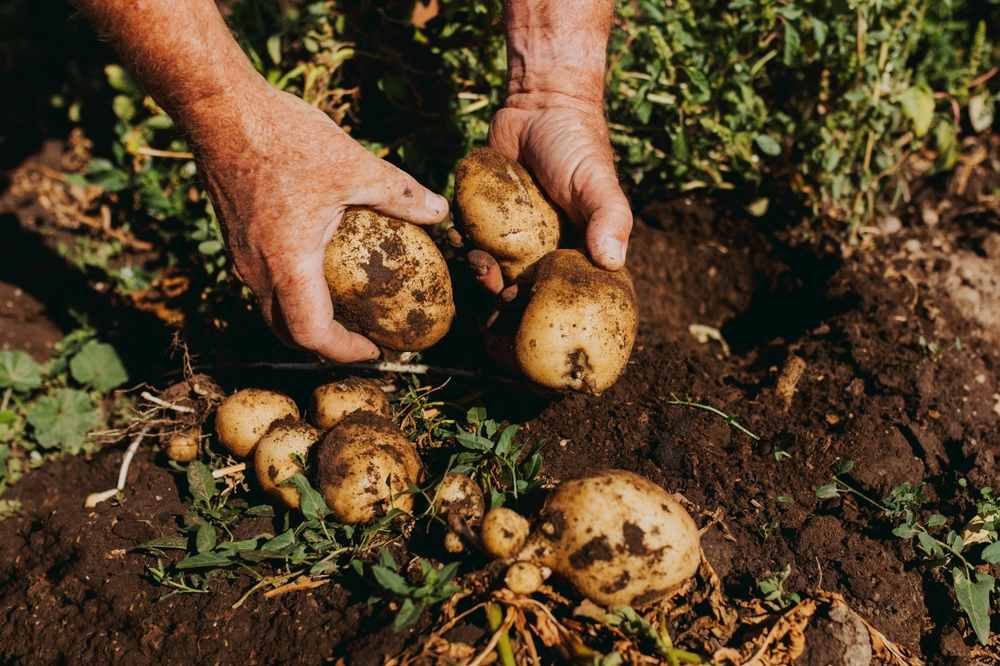
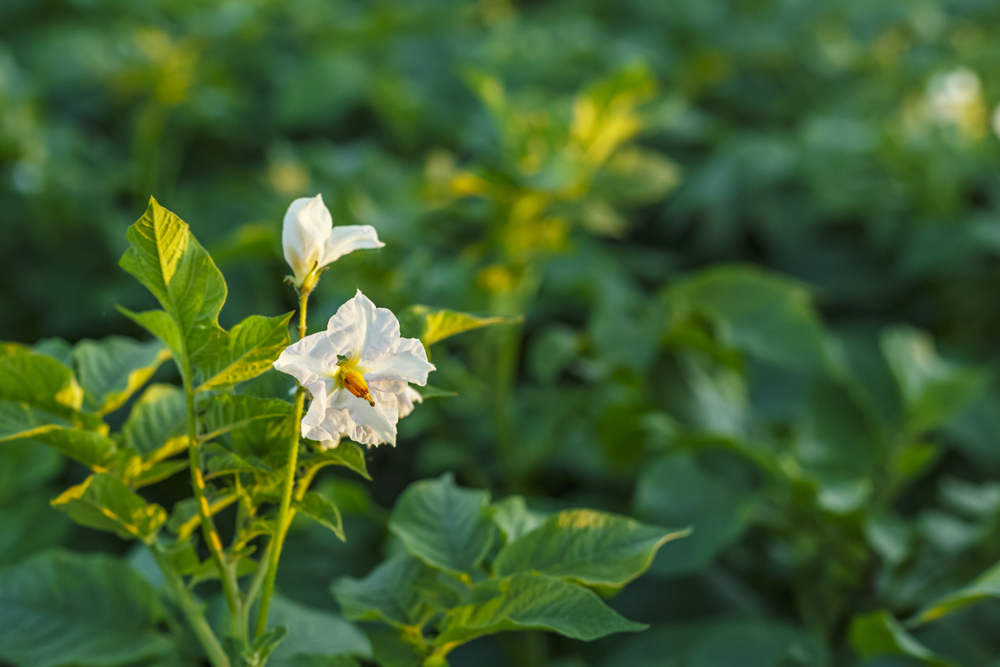
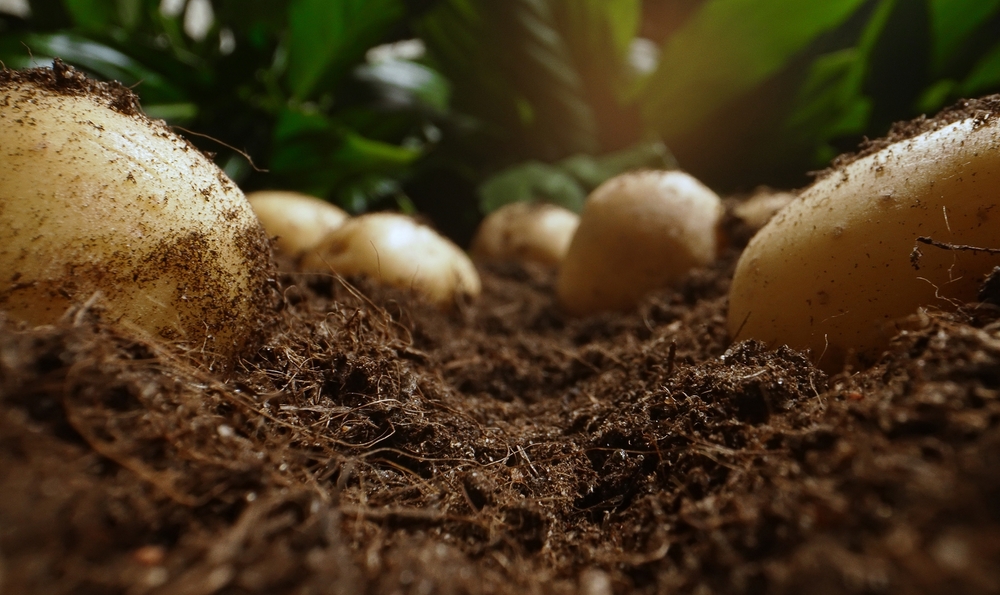
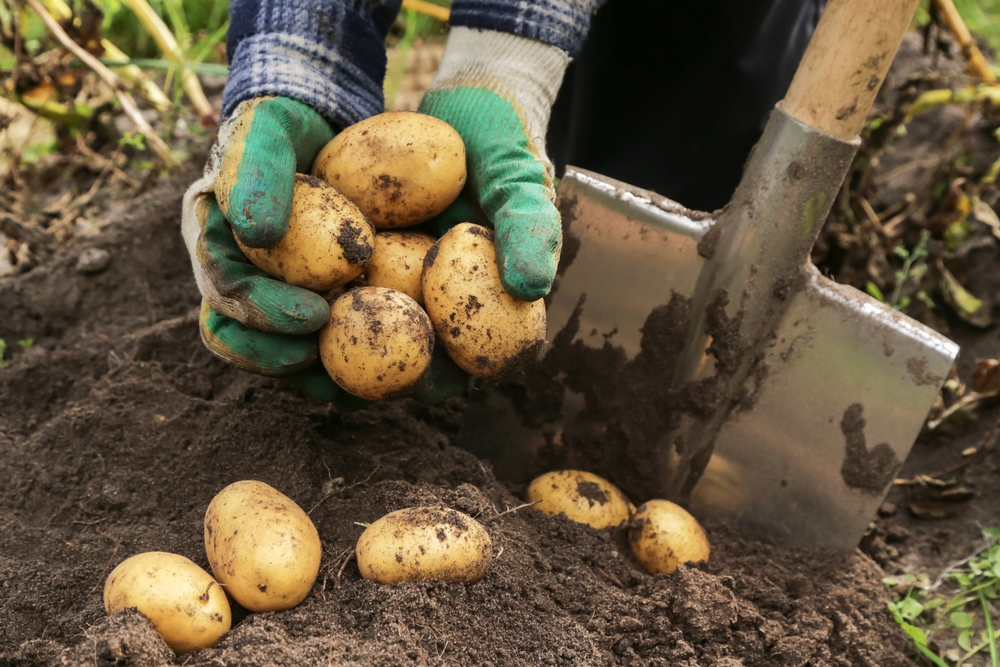
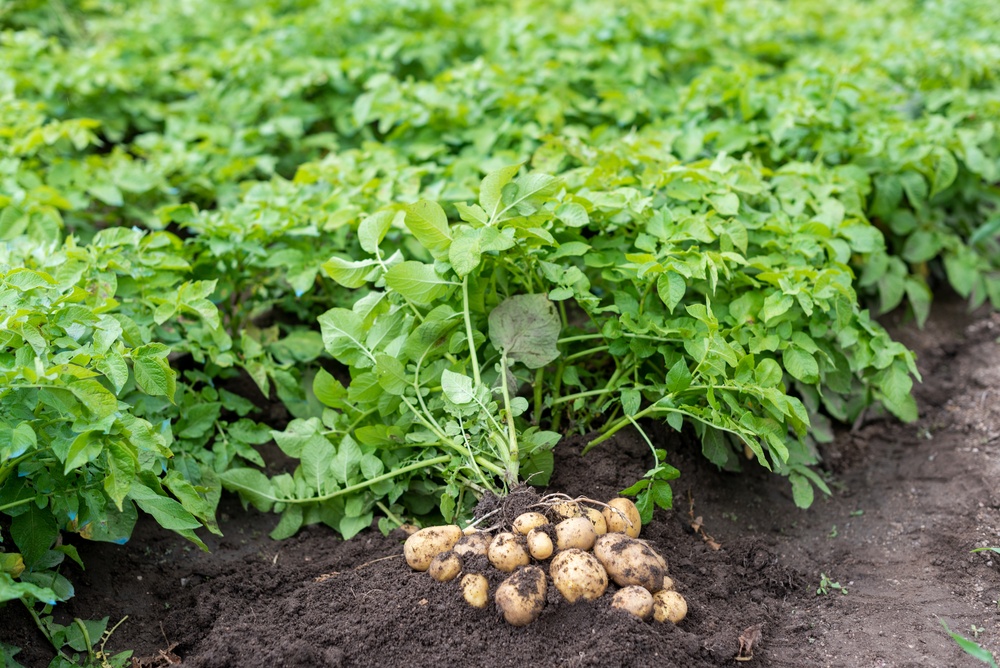
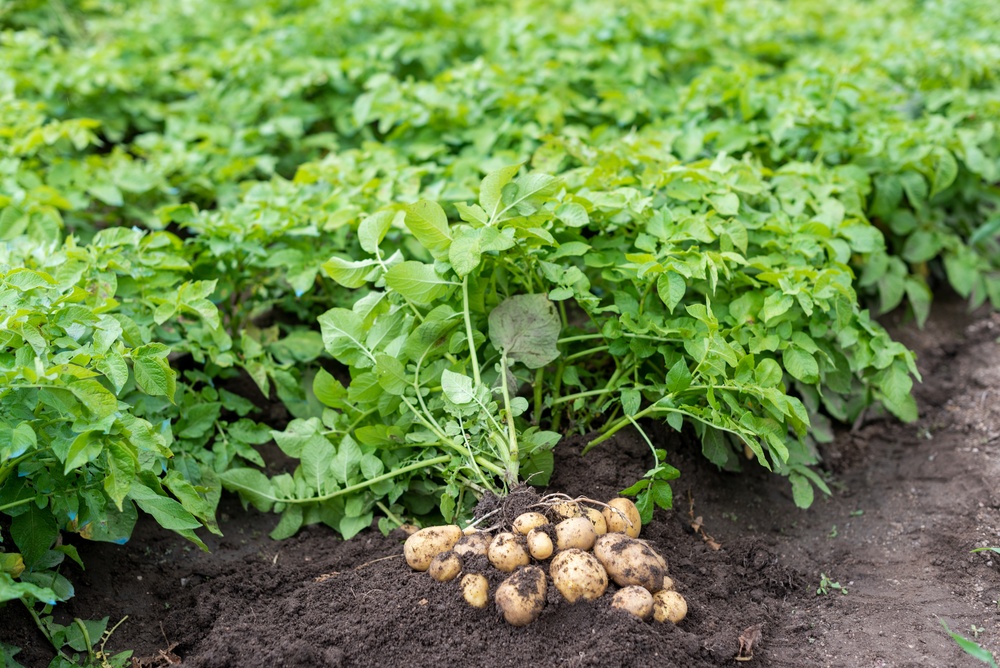
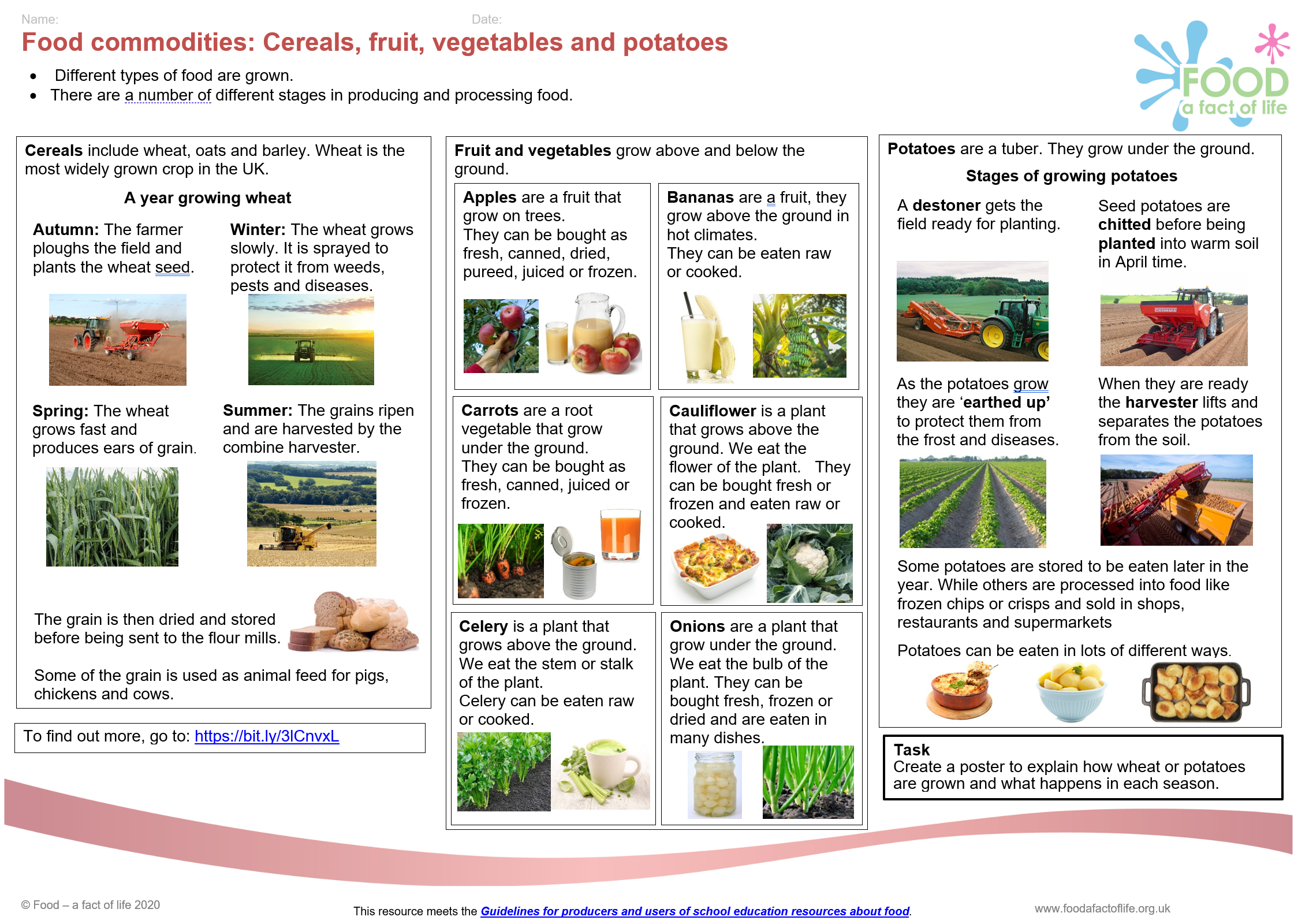
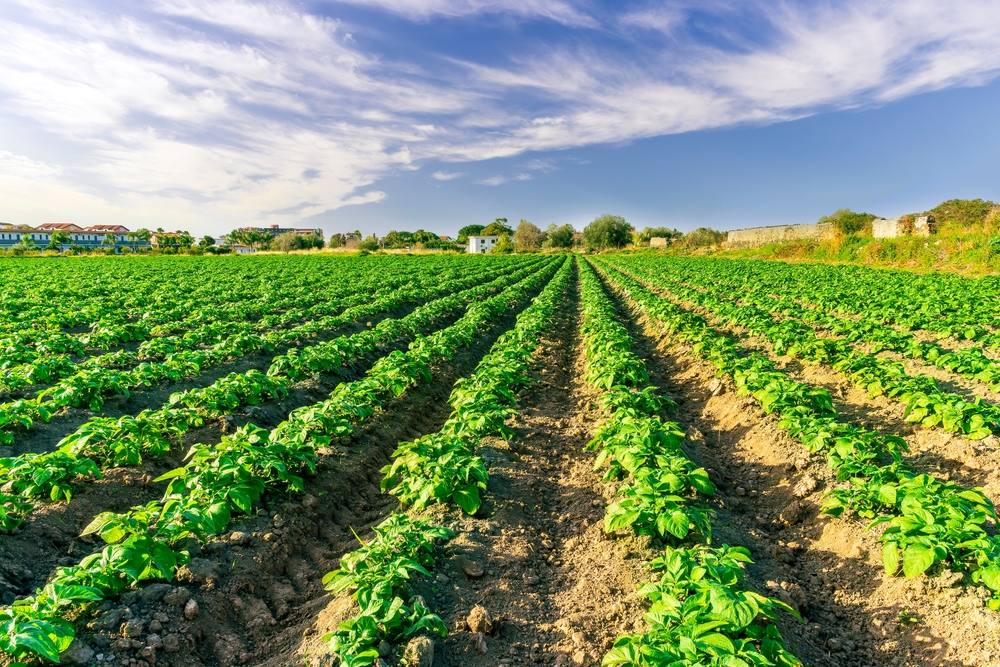
Ensure the children understand that potatoes come from a plant and that they are called tubers – a part of the plant connected to the root. Explain that potatoes grown under the ground.  Use the Growing potatoes presentation to show the children what a potato plant looks like and how potatoes grow. 


Provide children with a copy of the Potato plant parts worksheet.  Ask the children to name all the parts of the plant. Talk about which label belongs to each part of the plant.  Get the children to cut and stick the labels to the correct plant parts and colour the plant picture. 


More challenge...

Get the children to carry out some potato research in small groups. Each group should create a potato fact sheet. This should include: what a potato plant looks like, a labelled sketch, the function of different plant parts, the life processes of the plant, e.g. growth, nutrition, movement, reproduction. It could also include information about: growing potatoes, what a potato needs in order to grow well; where in the UK potatoes are grown; types of potatoes grown in the UK; how to store potatoes; how long they take to grow.


Round up

Ask the children:

  • Are potatoes from a plant or animal?
  • Where do potatoes grow?
  • Name the different parts of a potato plant: leaves, stem, root and tuber.
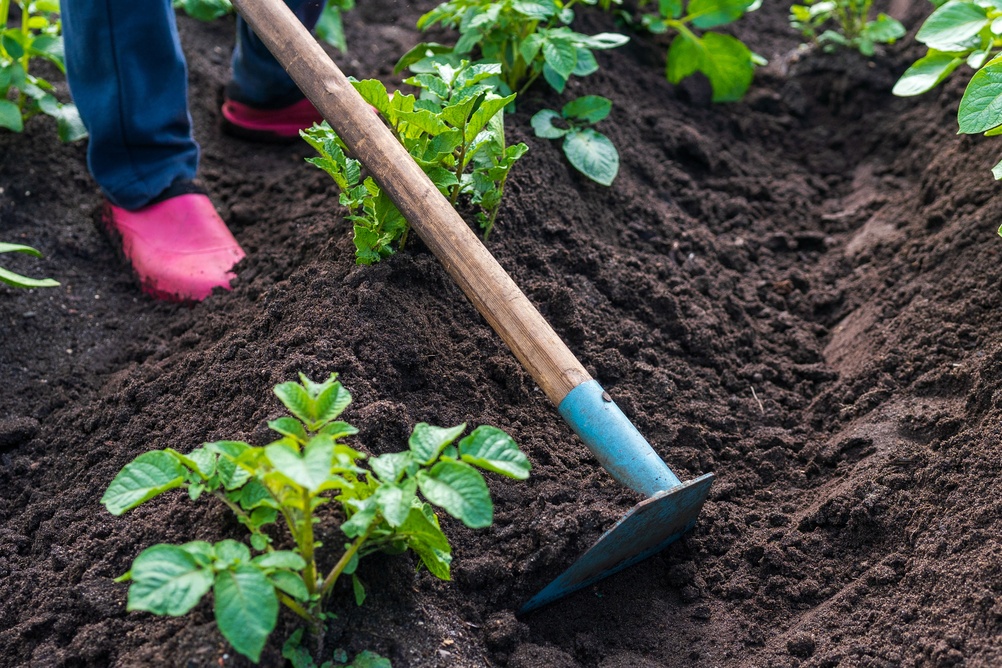
  • Who can recall the main stages of growing potatoes? Preparing the ground; Chitting; Planting; Growing; Flowering; Harvesting.


Extension ideas

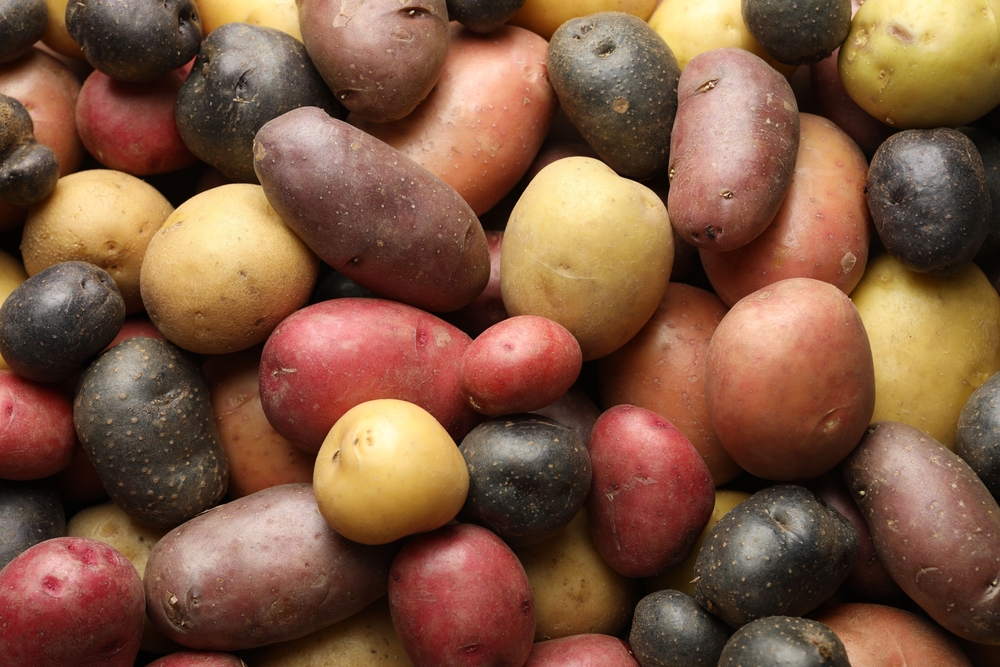
  • Display images of different types of potato.
  • Ask children to record how many times they eat potatoes over a week.
Activity 1 - The potato (resources)

Activity 2: Types of potato, varieties and cooking methods

Introduction

This activity is about different types and varieties of potatoes and that they can be prepared and cooked in different ways.


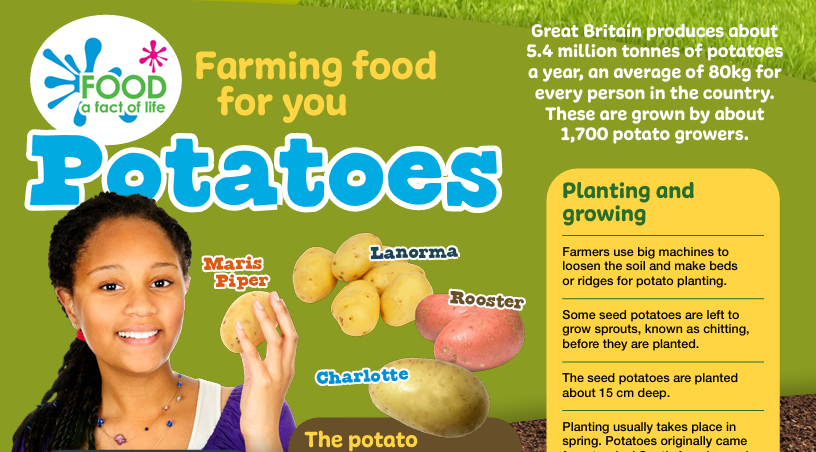
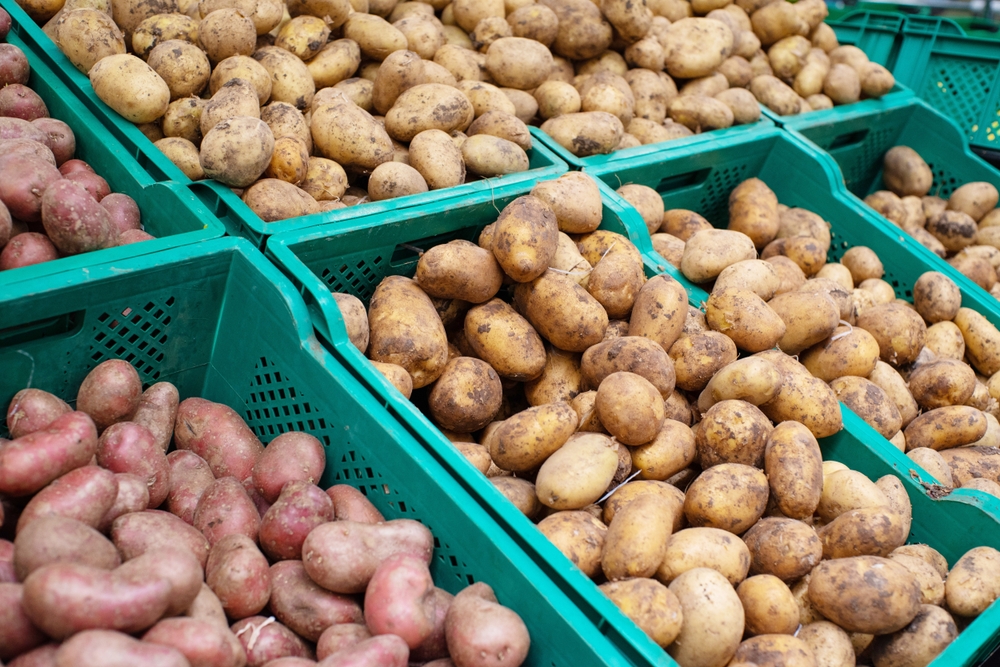
Some potatoes are more suitable for certain dishes than others, because of the way they react when cooked.  For this session you will need four to five different varieties of potatoes. Ideally choose varieties that look different from each other and are for different purposes, e.g. baking, mashing. Refer to the Potato types and varieties factsheet for ideas.


Explain to the children that there are lots of different varieties of potatoes. Show the children a selection of different potatoes and ask them to describe the differences and similarities. You could pass the potatoes around so the children can handle them.  Make sure the children wash their hands after handling the potatoes. Explain that potato varieties can be grouped into three types. Each type behaves differently when cooked and is good for cooking in different ways. Using the Types of potatoes presentation, explain the three types: fluffy, salad and smooth.


  • Fluffy potatoes go crumbly round the edges when cooked. This produces delicious crispy bits when roasted. Fluffy potatoes are also good for making chips and baking as jacket potatoes.
  • Salad potatoes keep their shape well, and remain slightly firm when cooked. They are perfect for potato salad and also good for steaming and roasting whole.
  • Smooth potatoes soften equally right through when cooked and are the best for mashing. They are also good for boiling, and making wedges.

Ask the children to tell you about meals they have eaten which include potatoes.  Make a list of different dishes and meals, which include potatoes. Discuss which types of potatoes could have been used in the dishes they have tried. Discuss the ways potatoes can be cooked, e.g. boiled, roasted, mashed. Discuss how potatoes look before and after they are cooked, e.g. roast potatoes become crispy on the outside and fluffy in the middle.


Task

Ask the children to draw and label some of their favourite potato dishes and meals. Encourage them to make their dishes and meals look as attractive as possible so they will appeal to other people.


More challenge...

Ask the children to complete Potato types and varieties worksheet using the Potato types and varieties factsheet to help them. Challenge the children to design a poster to show people the different dishes and/or meals they can create with potatoes. Encourage the children to present their work in an attractive way to make their dishes and meals appeal to other people.


Round up

Consolidate children’s learning by asking them the following questions:

  • What is a fluffy potato?
  • What is a salad potato?
  • What is a smooth potato?
  • What could you make from each type of potato?
  • Can you name two varieties of potato?
  • What is your favourite potato dish or meal?

Extension ideas

  • Challenge the children to find out the names of as many different varieties of potatoes as they can. What is the most unusual variety of potato they can find?
  • Challenge children to name the best type of potato to use for dishes. Use the Types of potato worksheet to record their answers.
  • Give children the Potato varieties worksheet as homework.
  • Arrange a local supermarket visit and ask for a manager to be present to talk to the children about the potatoes in the store. Brief the manager on the information the children will find useful, e.g. How many varieties of potato are available from the supermarket? Where are they sourced? Give each of the children a copy of the Shopping trip worksheet. Before they complete this sheet, ensure the children have had a good look around different parts of the supermarket to find meals and dishes made from potatoes. Take some photographs during your supermarket visit and create a display.

Activity 2: Types of potato (resources)

Activity 3: Field to fork

Introduction

Explain to the children that you will be looking at what happens to potatoes after they are harvested.


Ask the children for their ideas on how potatoes get from ‘field to fork’. Show them the Field to fork presentation and discuss what happens at each stage. Summarise the key stages using the last slide.

Task

Set the children the task of creating their own images or drawings of the stages a potato goes through from ‘field to fork’.


Ask the children to work in small groups to create an image of one of the stages. They could do this using a computer or with collage or paint. Put all the stages together to create a class display.  Ask each group to write a description of each stage.


More challenge...

Work on a computer or with art materials, textiles or pens and paper to create a step by step explanation of how potatoes go from ‘field to fork’. Alternatively, challenge the children to explain how another vegetable goes from ‘field to fork’. Ask the children to write up a description of each stage.

In small groups the children could prepare their own  presentation to explain the field to fork journey and present this to another class in the school. This could be presented as a play or a reading.


Round up

Ask the children to show and explain what they have done.


Extension ideas

  • Find out how other foods are grown and produced.
  • Arrange a visit to a farm to see some animals being reared or fruit or vegetables being grown or harvested.

Activity 3: Field to fork (resources)

Activity 4: Where do potatoes grow in the UK?

Introduction

This activity is about where potatoes are grown in the UK. For this session you will need maps of the UK, and enlarged version of the Where do potatoes grow? worksheet and access to the internet.


For younger children, find 3-4 places where potatoes are grown in the UK and write the names of the places around the edge of the worksheet. Place dots on the worksheet UK map to show where the places are. Photocopy the sheet for the children to use in the ‘task’ part of the lesson.

For information, the following is a list of the main places where potatoes grow in the UK:

  • Cambridgeshire
  • Cornwall
  • Herefordshire
  • Lincolnshire
  • Norfolk
  • Pembrokeshire
  • Perthshire
  • Shropshire
  • Suffolk
  • Yorkshire

Show the children the enlarged Where do potatoes grow? worksheet and establish  that it shows the UK. Look at a map of the UK with the children and identify where you are. Talk about what it is like where you live, e.g. weather, climate. Compare it with other places the children may know or have heard about.

Display your enlarged copy of the worksheet and demonstrate how to mark where you are on the sheet. Ask the children to name other places they know in the UK, e.g. where a relation lives, where they have been for a day trip or holiday.  Find these on the UK map.


Task

Hand out the worksheet you adapted before the lesson. Show the children how to look at the UK map to find the places names on their sheet.  When they have found the place, they need to draw lines on their worksheet to link the place names to the dots showing the location.


More challenge...

Give the children copies of the Where do potatoes grow? worksheet. Ask the children to work in pairs or threes to do their research.


Round up

Get the children to feedback their research and what they have found out. Question the children:

  • Where are the main places potatoes are grown in the UK?
  • What are these places like?
  • Are they all in a particular part of the country?
  • What is the climate and landscape like in these places?
  • Do you think there is a reason why potatoes are grown there?
  • How does the climate affect living things?

Extension ideas

  • Organise a visit to a local farm which grows potatoes.

Activity 4: Where do potatoes grow? (resources)

Activity 5: Grow your own potato

Introduction

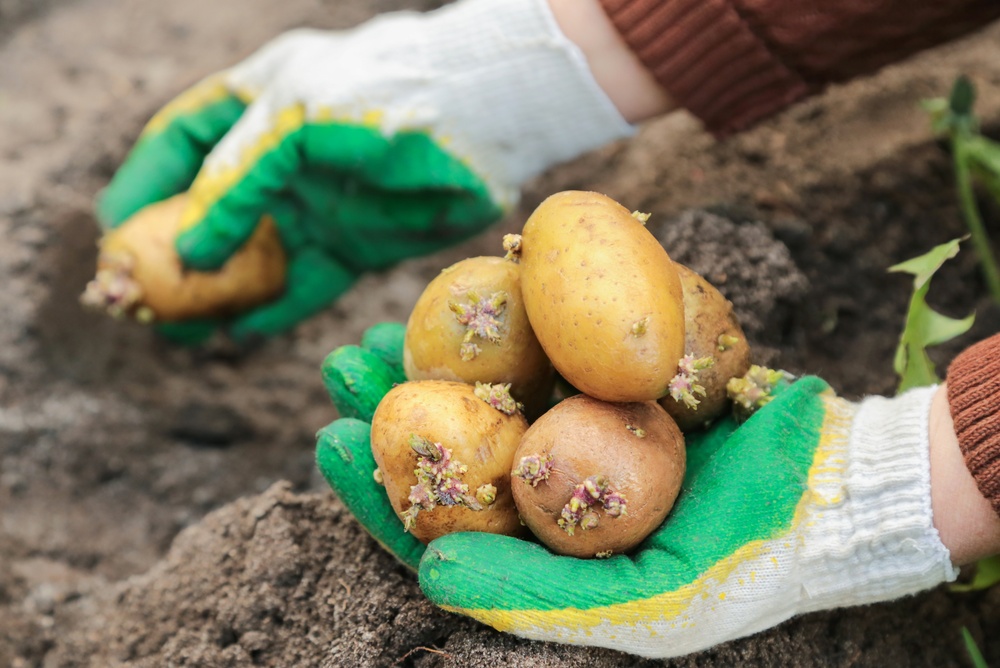
This activity is about growing potatoes. You will need to prepare the seed potato a few weeks in advance to do the planting in this session. Information can be found on the Planting my potato factsheet, Growing my potato factsheet and Growing tips factsheet.


You will need:

  • Seed potatoes and grow bags/tubs
  • 1 x egg box
  • Compost or soil

Optional items:

  • Trowels
  • Plastic gloves - hands must be washed thoroughly after handling potatoes and soil if gloves are not worn
  • Watering can

Explain to the children that they will be planting a potato.


Question the children:

  • What equipment will we need in order to plant a potato? Make a list.
  • Can you explain exactly what you think we will need to do, step by step?

Look at the Growing my potato factsheet.


Discuss what is happening and ask the children about how they could do this when they plant their potatoes. Summarise what the potatoes need in order to grow well. Establish that the potato – tuber, is a seed.


Task

Before you begin, establish who will be doing what part of the planting. Talk them through how they will use the equipment to plant their potatoes.  This will vary depending on whether you have a school garden in which to grow them, or whether you will be growing them in the grow bags. Put them where you want them to be before you fill them. Allow the children to plant their potatoes.


Caution: if you are using buckets or grow bags, these will be quite heavy when filled with soil.


The How my potato grows worksheet  – involves sketching how the potato plant looks at 3 week intervals. Talk through the worksheet with the children and explain that they will fill it in every 3 weeks.


Talk about what they will be drawing over the coming weeks. You may like them to do a sketch of the planted potato or you may wish to wait for the first 3 week interval before you begin.  With those who may need more support, you could enlarge the worksheet and fill it in as a class.


Create a story board/diary to record how the potato grows at regular intervals. Children could use a digital camera or video camera to record progress.


Round up

Talk to the children about what they will have to do to care for their potatoes. Challenge them to decide how they will ensure their potatoes are cared for, e.g. a watering rota.


Extension ideas

  • Give each child a copy of the Potato journal booklet so that they can record the growing activity. There are other activity suggestions given, helping to consolidate learning.
  • Get the children to measure the height of their potatoes at regular intervals over the coming weeks and create a graph.
  • Ask the children to write a set of instructions to tell someone how to grow a potato.
  • Grow a different type of plant which provides food, e.g. bean, cress. Compare how this plant and your potato plant grow. Use the potatoes and other plants worksheet 3 to compare two plants.

Activity 5: Grow your own potato (resources)

Activity 6: What potatoes need to grow

Introduction

This activity is about what potatoes need in order to grow well.


You will need:

  • 4 seed potatoes
  • 4 large 10 litre pots (you could use buckets)
  • Bits of broken plant pots or pebbles
  • Soil or compost to fill the pots

Children can undertake their investigation in groups or you could complete it as a class. See the Grow potatoes investigation factsheet for equipment and investigation ideas.  


Groups: Each group can plant 4 potatoes in four separate containers, keeping one as a control and changing one variable for each of the other 3 plants.


Class: Split the class into four groups with each group being responsible for growing one potato with a different variable. For young children you could just plant a control and one or two other variables.


This investigation can be set up separately or in conjunction with the Grow your own potato activity.


Talk to the children about what they think is needed to make a potato grow well (light, water).  Ask the children how they know this, and how they could confirm what they think.  Establish that they could remove or change one of the conditions they think the potato needs and see if it makes any difference.  Discuss the condition changes you could try, e.g. temperature, water, light, soil. Look at the Grow potatoes investigation factsheet for ideas.


Explain that in order to see whether making these changes makes any difference, you must grow a potato in the usual way as well, so you can compare them. The potato grown in the usual way is called the control. The other potato/es must also been grown in the same way with just one condition/variable/factor changed so you can see if that is what really makes a difference.


Task

Let the children plant their potatoes. Talk this through together first to emphasise the importance of ensuring that only the variable/factor is changed and the rest are the same, so it is a fair test.

Discuss the idea of a ‘fair test’ with the children to ensure they understand.

You could set up a class record or children could keep their own records. You may wish to use the Potato investigation worksheet 1 (compares a control potato and a potato with a variable changed) or the Potato investigation worksheet 2 (compares one control and three variables).


Round up

Re-cap on what you have done, question the children:

  • What are we trying to find out?
  • What have we done?
  • What do you think will happen?
  • How have you made sure it is a fair test?

Discuss how you will be recording the investigation including how often observations will be made.


Extension ideas

  • Grow different types of potatoes and investigate which type grows faster and how they differ in appearance?
  • You could use the Are they the same? worksheet to help record your findings.

Activity 6: What potatoes need to grow (resources)

Potatoes for 11-14 years

Potato resources for 11-14 years

Potatoes for 14-16 years

Preparing potatoes resources for 14-16 years

Cooking potatoes resources for 14-16

Did you find this page useful?

We'd love to hear your feedback. If you would like a response, please contact us at [email protected]