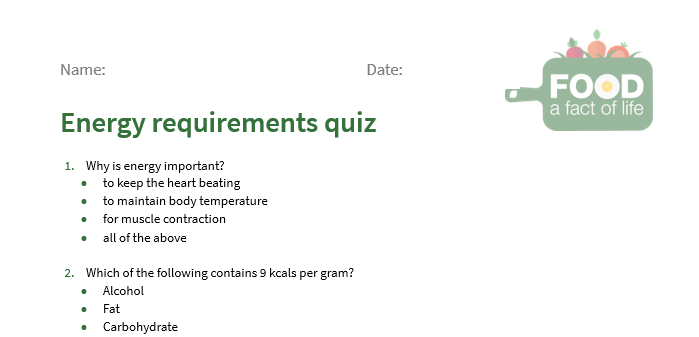
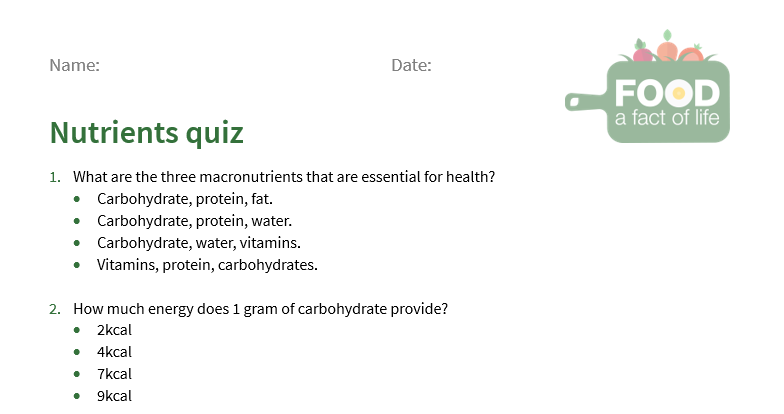
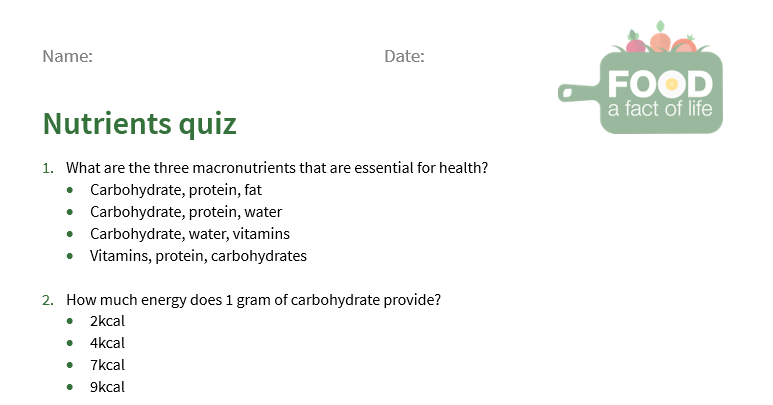
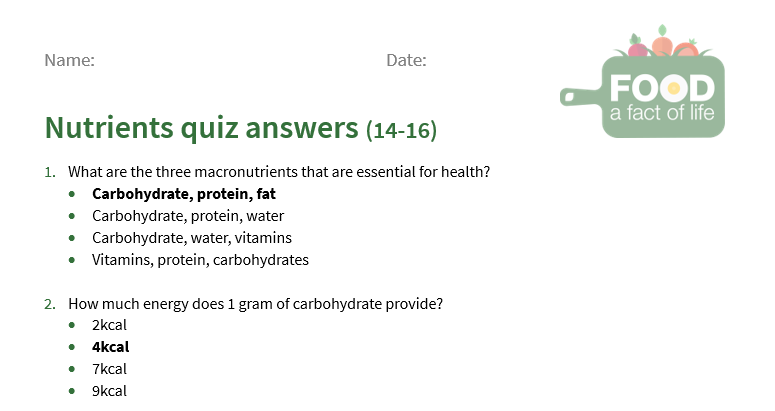
Complete the Kahoot - nutrients quiz and Kahoot nutrients Q&A to review and check understanding.
Compare a variety of similar food that has been modified, for instance to reduce the fat content, e.g. potato crisps that have been baked rather than fried. Discuss the claims that are made on the packaging and/or advertising. Review the food labels and compare the nutritional value. Ask the pupils what they notice about the ingredients and methods of cooking that have been used to make the products.
If time allows challenge the pupils to prepare a dish that provides a particular nutrient. For example they could produce a meat or vegetarian alternative dish that provides a source of iron. Ask the pupils to prepare a short explanation about the ingredients they have chosen and justify their choice. Use a nutritional analysis programme, such as Explore food, to create a nutritional analysis of their dish.
Use a nutritional analysis programme, such as Explore food, to investigate the energy and nutrient values of different food commodities. Complete the Energy and nutrients provided by different food worksheet and compare the food that have been analysed. Discuss with the pupils how this knowledge might influence ingredient selection.
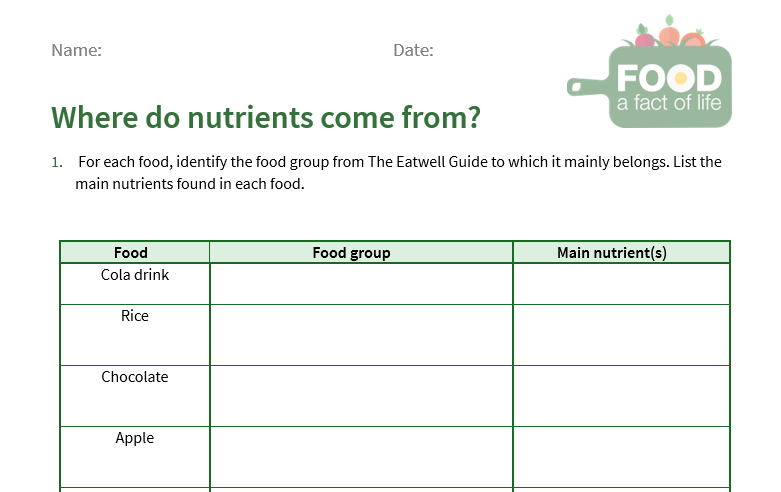
Task the pupils to complete the Nutrient Matching activity. Print and cut out the two sets of cards (they could be laminated for future use) along with a set of Eatwell Guide food cards. Organise the pupils into small groups and ask them to match the nutrient, function and food source(s).
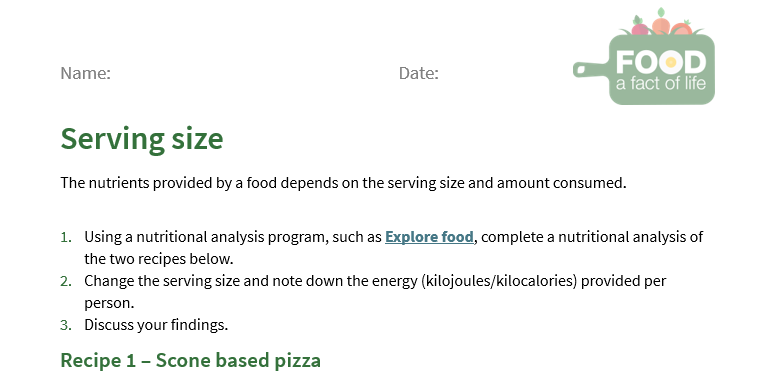
The nutrients provided by a food or dish depend on the serving size. Serving sizes depend on individual needs, for example age or lifestyle, meal occasion and type, and should always be considered when planning recipes and meals. Task the pupils to analyse two recipes using the Serving size worksheet and note down the energy (kilocalories/kilojoules) provided per person for each serving size.
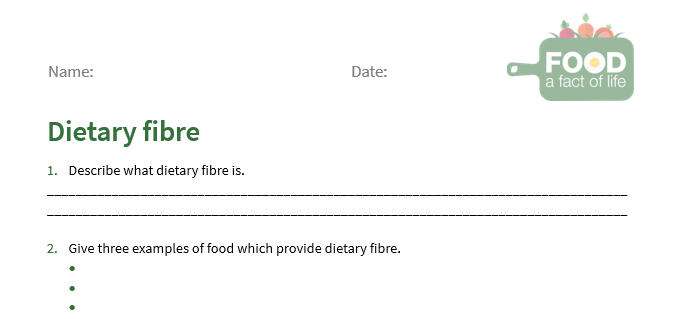
To enhance the pupils knowledge of fibre in the diet show them the Dietary fibre presentation and then ask the pupils to complete the Dietary fibre worksheet.
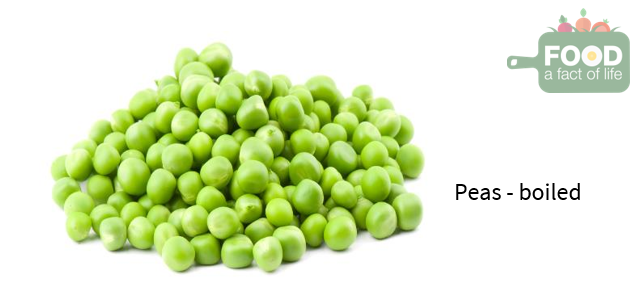
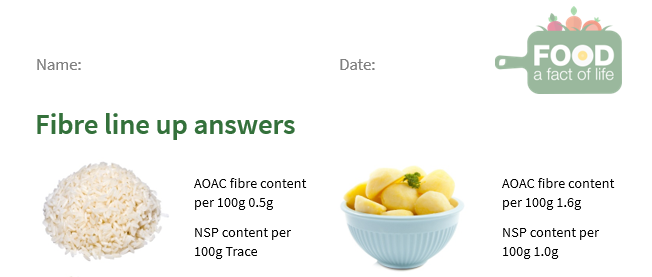
Complete the Fibre line up activity. Organise the class into groups. Distribute the Fibre food cards. Explain to the pupils that they should discuss the order in which they think the foods should be placed to show the least to the most fibre. Compare each group and give the correct Fibre line up answers. Discuss why some foods are higher in fibre than others.
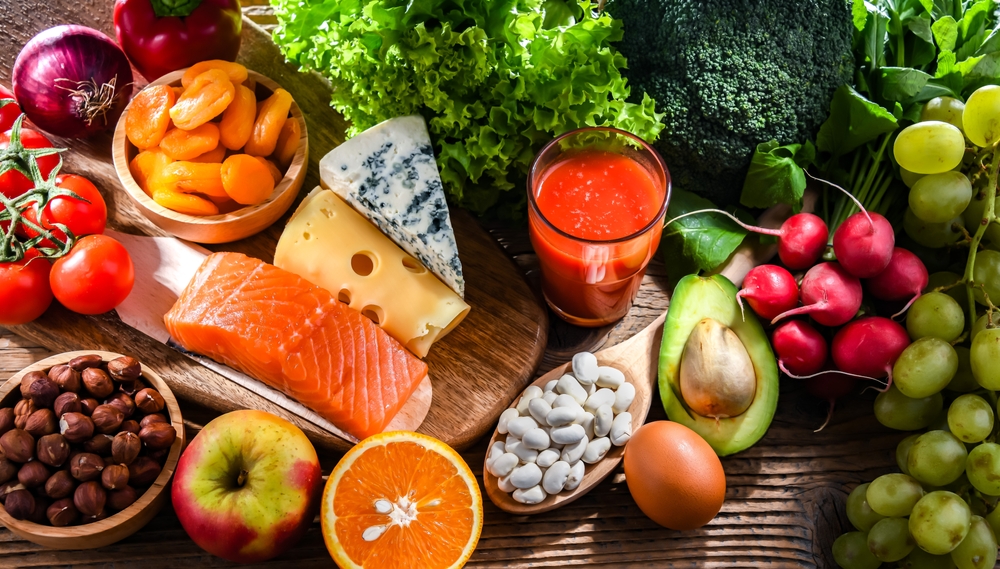
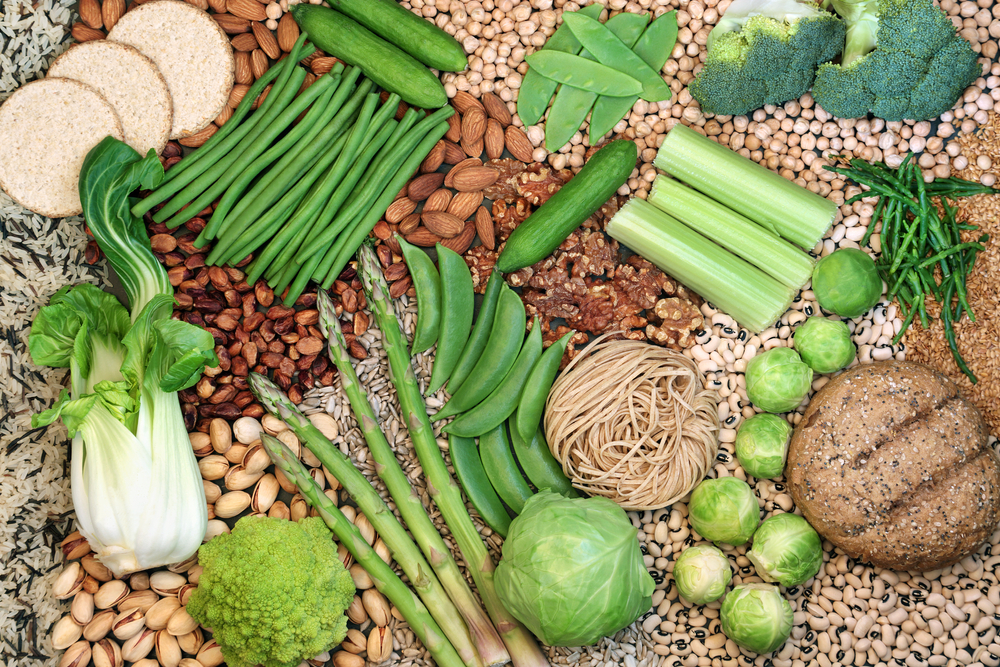
Display a range of different foods (or use the Fibre line up activity images). Ask the pupils to identify the food that they think provides dietary fibre.
Challenge the pupils to use a nutritional analysis programme such as Explore food to calculate and compare the fibre provided by a range of food; for example white and brown rice, white and granary bread, cornflakes and porridge oats. Ask the pupils to present this information on a series of graphs.
Provide the pupils with the Change for health worksheet and ask them to review a lasagne recipe and indicate the changes they would make to reduce total fat and increase fibre content. It time allows, challenge the pupils to make the standard and modified recipe and then conduct a sensory evaluation and nutritional analysis of the dishes.
To develop independent research and enable pupils to make their own choices around cooking for health, complete the Make it with mince challenge – higher fibre dishes.
To consolidate their learning challenge the pupils to complete the Dietary fibre Kahoot quiz and Dietary fibre Kahoot quiz answers.